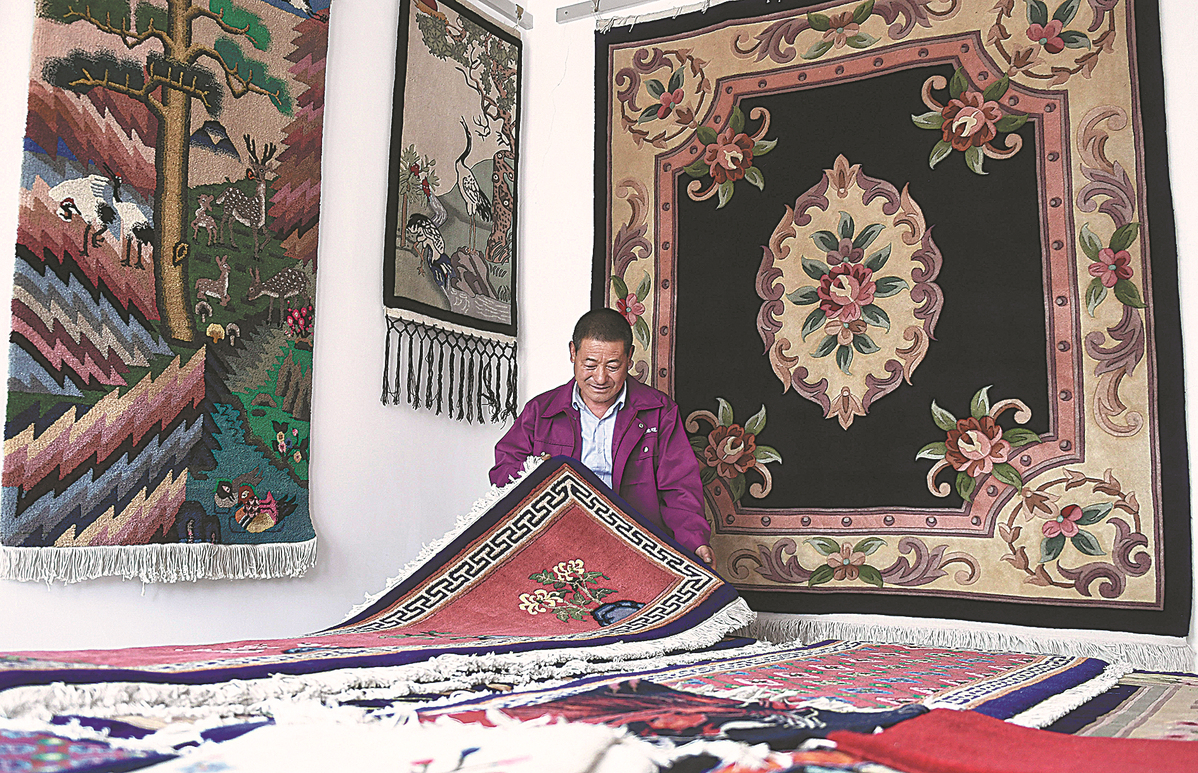
Tibetan Carpet
Introduction
Tibetan Carpets, a traditional handicraft with a long history, are renowned for their durability and intricate designs. Originating from the Qinghai-Tibet Plateau, these carpets have served as essential tools for warmth against the harsh cold of the plateau's climate. Over the centuries, the art of Tibetan carpet weaving has evolved from a practical craft into a celebrated cultural heritage, recognized by its inclusion in China's list of national intangible cultural heritage items in 2006. Traditionally crafted from resilient wool sourced from sheep and yaks, Tibetan carpets are noted for their ability to withstand prolonged usage. The thick, hand-woven carpets are a testament to the meticulous craftsmanship that goes into each piece, often taking a month to complete. Today, Tibetan carpets are not only used for practical purposes but have also become sought-after decorative items in homes worldwide, showcasing the rich cultural significance and artistry behind their creation.
Production Techniques
The production of Tibetan carpets involves a series of detailed and labor-intensive steps, each requiring a high level of skill and precision. The process begins with the selection of high-quality wool, primarily from sheep and yaks native to Qinghai province. This wool is known for its strength and resilience, attributes that are vital for the longevity of the carpets. Once the wool is selected, it undergoes a washing and spinning process to create yarn. This yarn is then dyed using natural dyes, which not only provide a range of rich colors but also ensure that the carpets remain environmentally friendly.
Weaving is the most intricate part of the production process. Skilled artisans employ traditional hand-knotting techniques, a method that has been passed down through generations. This technique involves tying individual knots on a loom, creating the carpet's unique patterns and ensuring its durability. The weaving process is time-consuming and can take up to a month to complete a single carpet, depending on its size and complexity.
After weaving, the carpet undergoes a finishing process, which includes washing and trimming to refine its texture and appearance. Some modern producers have incorporated machinery to assist with initial weaving stages, allowing them to meet the increasing demand while maintaining traditional hand-finishing techniques to ensure the quality and authenticity of the final product.
Modern Usage and Global Influence
In contemporary settings, Tibetan carpets are highly valued for both their aesthetic appeal and their cultural significance. They are used as decorative pieces in homes, hotels, and cultural institutions around the world. The unique craftsmanship and the stories woven into each carpet make them not just items of utility but also pieces of art.
The global demand for Tibetan carpets has fueled a significant industry in Qinghai, where companies like Shengyuan Carpet export to over 40 countries, including regions in Europe, North America, and the Middle East. The use of online sales platforms and the incorporation of smart manufacturing techniques have broadened the customer base, extending beyond traditional markets to individual households seeking custom designs.
The influence of Tibetan carpets extends beyond their role as decorative items. They represent a successful blend of ancient craftsmanship with modern innovation, contributing to the promotion of cultural heritage on an international scale. This global reach has also provided economic opportunities for local communities in the Qinghai-Tibet Plateau, promoting employment and aiding in regional development.
Preservation and Promotion
The preservation and promotion of Tibetan carpet weaving are crucial for maintaining this significant cultural heritage. Challenges such as the decline in young artisans willing to learn the craft and the competition from machine-woven carpets pose threats to the traditional hand-weaving skills. However, efforts are being made to combat these issues.
Inheritors like Yang Yongliang play a pivotal role in preserving these techniques by teaching new generations and advocating for the craft's importance. Government support, in the form of funding and the recognition of Tibetan carpet weaving as intangible cultural heritage, has been instrumental in these efforts. Additionally, partnerships with educational institutions and international organizations have facilitated training programs, especially for women in rural areas, providing them with skills to support their families economically.
The emphasis on innovation, such as adopting eco-friendly materials and enhancing the artistic value of carpets, has also contributed to the craft's longevity. By integrating traditional techniques with modern demands, Tibetan carpet weaving continues to thrive, not only preserving a vital cultural asset but also enriching the global tapestry of artistic traditions.








